
As per the ministry's updated data on coronavirus cases Saturday morning, six fresh deaths were reported -- three from Maharahtra, two from Delhi and one from Gujarat.

'The COVID-19 pandemic must push the military into a long-term reconsideration of its primary challenges.' 'There must be greater emphasis on humanitarian aid and disaster relief including the management of contagious illnesses and impending crises caused by climate change,' notes Ajai Shukla.

'As the interest rates rise, people are going to say why should I be taking big risks when I can get 4 to 5 per cent in a bank account.' 'So, I think you have to change your thinking.' 'You need to look at the balance sheet, look at dividends.' 'These issues that have been ignored.'

Like ants declining to question the rules of the anthill, they feel innately justified in their approach, notes Shyam G Menon.

'Gandhi turned his life into a counter-intuitive experiment in old ideas like non-violence and swadeshi.' 'He offered numerous universal ideas that talk to the human condition.' 'His ability to take risks was outstanding,' says Sopan Joshi, explaining why the Mahatma's ideas are as relevant as ever.

'The number of deaths attributable to warming is likely to rise in the future.'

Lack of literacy is compromising the ability of farmers in India and China, two of the world's most populous countries with the smallest farm size, to raise productivity without losing soil fertility, says Kunal Bose.

Bold reforms and prudent monetary and fiscal policies by the incoming Narendra Modi government will help the economy to grow at 6.5-7 percent, says a report.

The Insurance penetration in India is very low at 3.9 per cent.
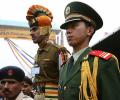
China and India have approached trade negotiations very differently: the former with confidence, the latter in a defensive crouch, says T N Ninan.

A new book may help companies in getting corporate social responsibility right, notes Ajit Balakrishnan.

Over 5,000 volunteers from 120 corporates, NGOs, schools, colleges, running groups, social organisations and individuals participated in the massive Chennai Coastal Cleanup drive held on June 7 morning. S Saraswathi reports.

To avert another Uttarakhand-type catastrophe, we must change course. We should stop pandering to the Indian elite's insatiable appetite for electricity, which is driving reckless dam construction, says Praful Bidwai

China has relaxed its one-child policy and further freed up markets in order to put the world's second-largest economy on a more stable footing.

'It is strange that a country like India, which had gone through crisis after crisis resulting from militancy, insurgency and terrorist attacks, should still be practising ad hocism in managing its security imperatives,' says B S Raghavan, the distinguished civil servant and former member of the Joint Intelligence Council.

Downplaying concerns of delay, Amitabh Kant, managing director of Delhi-Mumbai Industrial Corridor Development Corporation (DMIC), says the project will be delivered on time.
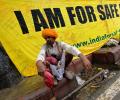
India is capable of developing GM crops, Randy Hautea, global coordinator for International Service for the Acquisition of Agri-Biotech Applications, tells Kanika Datta.
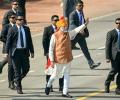
The 2019 election gives the Indian public the same choice: Between growth and oligarchs (or, in our case, dynasts and crony capitalists). If we chose wisely, well and good. If not, well, we have the Nehruvian Rate of Growth and massive corruption to fall back on. In a large sense, it is a choice between the India of the Lutyens elites and the Bharat of the real citizen, says Rajeev Srinivasan.

The fragmentation of politics and the pressures of coalition management have contributed to a near-secular rise in budgetary social expenditures and spending on subsidies since 1991, leaving little fiscal space for government-led capital investment.

Outlining seven principles of engagement for closer cooperation between India and China, Prime Minister Manmohan Singh on Thursday said the two countries should show sensitivity to each other's interests and sovereignty and move quickly to resolve the boundary issue.

'I would like to request the AERB, UCIL and DAE to introspect. The world is changing, so is India. The wave of development and modernity will not stop for those who continue to live in the past. The future belongs to the youth who believe in the values of honesty, transparency and efficiency.'
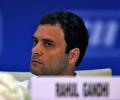
The Queen has retired, the bosses have left, long live the prince as king, says Shiv Visvanathan.

Following is the full text of Prime Minister Manmohan Singh's speech at the Central Party School in Beijing on Thursday:

The India that needs strategic alliances, defence cooperation and engaging meaningfully with neighbouring countries is quietly moving ahead with confidence, says Tarun Vijay

The public-private partnership model is a compulsion, says the minister.

This is the joint statement issued by the ministry of external affairs on the visit of US President Barack Obama to India.
